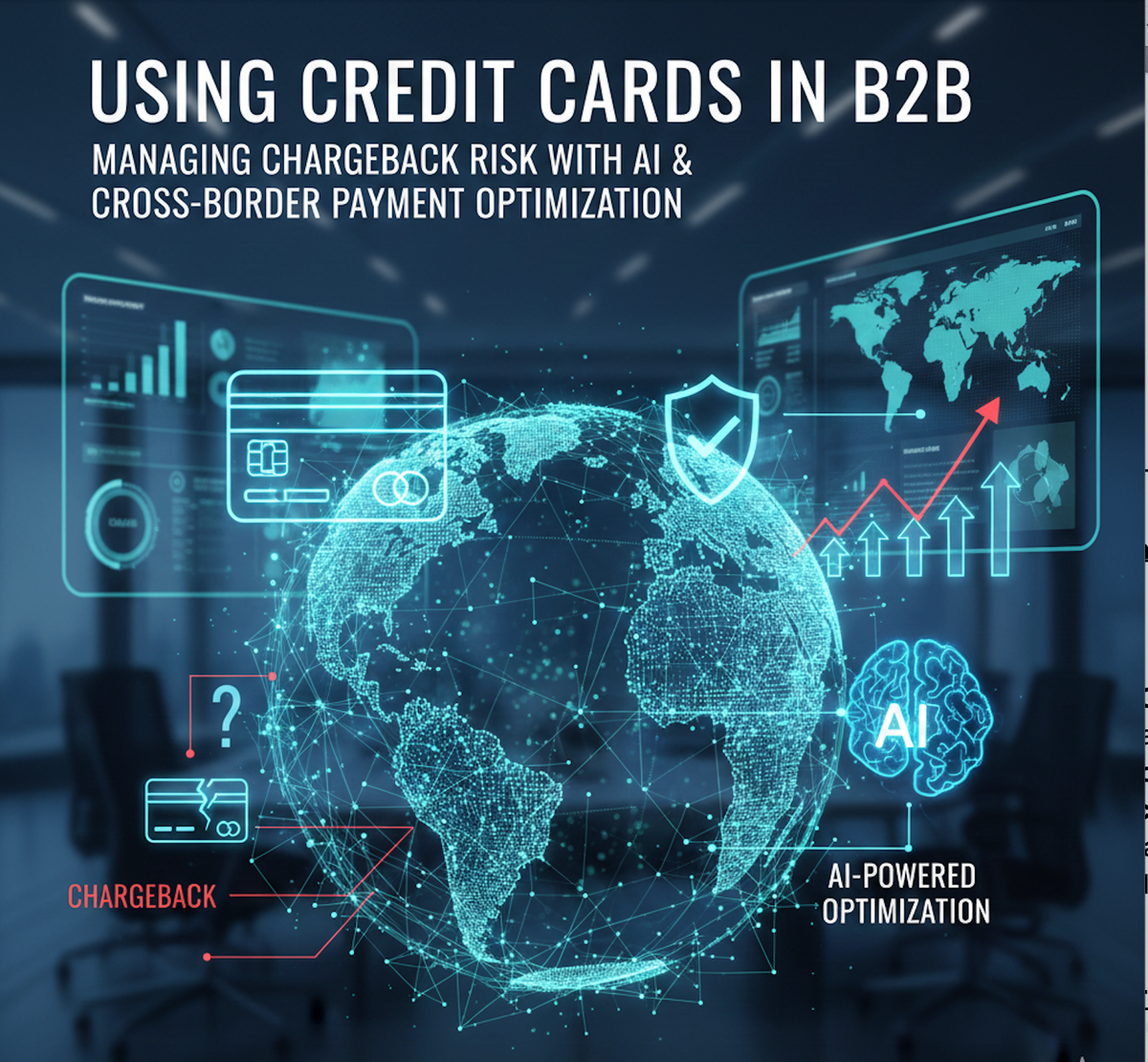
Using Credit Cards in B2B - Managing Chargeback Risk with AI and Cross-Border Payment Optimization
How AI helps B2B companies reduce credit card chargebacks while improving global payment performance
Credit cards are rapidly becoming a core payment method in B2B, especially for global transactions. They accelerate settlement, improve buyer flexibility, and remove friction from international payments. However, as card usage expands across borders, so does exposure to chargebacks.
For finance teams, the challenge is no longer just accepting cards safely - it is enabling growth while maintaining control through smarter cross-border payment optimization. This is where AI plays a critical role.
Why Credit Cards Matter for Cross-Border B2B Payments
Cross-border B2B transactions are complex by nature. Multiple currencies, jurisdictions, and compliance requirements slow down traditional bank transfers. Credit cards help simplify this complexity:
• Faster settlement compared to international wires
• Reduced FX friction for buyers
• Easier payments for new or smaller overseas customers
• Improved checkout experience across regions
From a seller perspective, cards can significantly reduce DSO and improve conversion. But without optimization, they can also introduce disproportionate risk.
The Chargeback Problem Is Bigger in Cross-Border B2B
Chargebacks are particularly challenging in cross-border B2B scenarios:
• Disputes may be driven by FX confusion or local tax differences
• Card network rules favor standardized consumer flows
• Delivery confirmation is harder for international or digital services
• Jurisdictional differences complicate evidence requirements
In high-value, cross-border transactions, even a small increase in chargeback rates can materially impact margins.
Why Manual Controls Do Not Scale Globally
Traditional chargeback management relies heavily on manual review and static rules. This approach breaks down quickly when operating across borders:
• Risk is assessed after the transaction is complete
• Local market nuances are missed
• Evidence is scattered across contracts, invoices, and logistics systems
• Finance teams spend time reacting instead of optimizing
This creates a tradeoff between accepting global card payments and managing exposure.
How AI Enables Smarter Cross-Border Payment Optimization
AI evaluates cross-border transactions in real time using signals such as:
• Country-to-country risk patterns
• Customer payment and dispute history across regions
• Transaction size relative to local norms
• FX volatility and billing consistency
This enables intelligent routing - approving low-risk card payments while redirecting higher-risk transactions to alternative methods.
2. Early Detection of Dispute Signals
AI identifies behavioral patterns that often precede chargebacks, including:
• Repeated disputes in specific regions
• Changes in purchasing behavior across currencies
• Delays between authorization and fulfillment
These insights help teams intervene early, before disputes escalate.
3. Automated, Network-Ready Evidence
When chargebacks do occur, AI automates evidence preparation across borders:
• Matching contracts, invoices, and delivery records
• Aligning documentation with card network standards
• Reducing errors caused by manual handling
This significantly improves dispute win rates while lowering operational cost.
4. Continuous Optimization Across Markets
AI models learn from outcomes across countries, customers, and payment methods, continuously improving:
• Acceptance rules
• Payment routing strategies
• Cross-border payment optimization policies
Over time, this creates a self-improving payment stack.
Growth Without Giving Up Control
Credit cards are a powerful enabler of global B2B growth, but only when paired with intelligent risk management. AI-driven cross-border payment optimization allows businesses to:
• Expand card acceptance internationally with confidence
• Reduce chargebacks without hurting conversion
• Protect margins in high-value global transactions
• Strengthen trust with international customers
The objective is not to restrict payments, but to optimize them.
Key Takeaway
As B2B commerce becomes increasingly global, chargebacks are no longer a local issue - they are a cross-border risk. AI transforms credit card acceptance into a strategic advantage, enabling scalable growth through smarter, safer, and more optimized global payments.
Ready to optimize your cross-border payment strategy? Explore how AI-powered tools can help your finance team reduce chargebacks while accelerating global growth.