Top 5 Reasons Credit Insurance Claims Get Denied – And How AI Prevents It
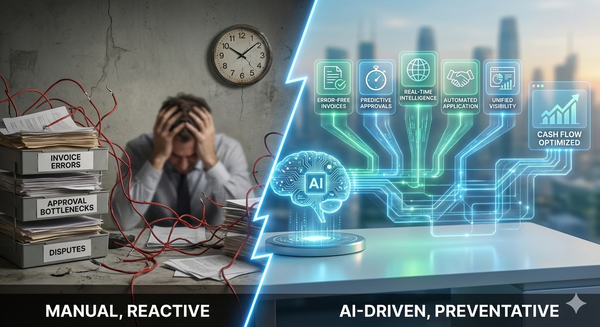
Most credit insurance claim denials are caused by operational non-compliance – not insurer refusal. Here's how AI-driven customer-to-cash platforms prevent them.

Credit insurance is designed to protect revenue and stabilize cash flow. Yet many finance teams discover – often at the worst possible time – that their claim is denied or partially rejected.
When that happens, the problem is no longer buyer risk. It becomes operational risk.
The uncomfortable truth is that most denied credit insurance claims are not caused by the insurer. They are caused by gaps inside the customer-to-cash process.
Below are the top five reasons credit insurance claims get denied – and how AI-driven customer-to-cash platforms prevent those failures before they happen.
1. Late Notification of Overdue Accounts
Most credit insurance policies require policyholders to notify the insurer when an account becomes overdue beyond a specific threshold – often 30, 60, or 90 days.
If notification deadlines are missed, coverage may be reduced or voided entirely.
In complex portfolios with hundreds or thousands of buyers, manual monitoring creates risk. Overdue thresholds get crossed quietly. Deadlines slip.
How AI Prevents It
AI continuously monitors:
• Invoice aging in real time
• Policy notification thresholds
• Buyer-specific coverage terms
Instead of relying on calendar reminders or spreadsheets, AI automatically flags and triggers required notifications within policy timelines. No surprises. No missed deadlines.
2. Breaching Approved Credit Limits
Credit insurers approve specific credit limits per buyer. If exposure exceeds that limit without formal approval, claims on the excess amount may be denied.
This often happens when:
• Sales increases volume rapidly
• Credit limits are not updated dynamically
• Cross-border entities transact independently
Manual exposure tracking is rarely synchronized across systems.
How AI Prevents It
AI-driven buyer intelligence:
• Aggregates exposure across entities and currencies
• Tracks insured versus uninsured balances in real time
• Alerts teams before limits are breached
• Recommends limit increase requests proactively
Dynamic visibility ensures the company stays within insured parameters.
3. Non-Compliance With Policy Terms
Credit insurance policies include strict requirements around:
• Payment terms
• Collection actions
• Legal escalation timelines
• Documentation standards
Even small deviations – extending payment terms without insurer approval, delaying formal collection steps, or missing documentation – can invalidate claims.
These requirements are often buried in policy documents and managed manually.
How AI Prevents It
AI embeds policy rules directly into the customer-to-cash workflow:
• Flags when proposed payment terms exceed insured parameters
• Guides collections timing according to policy conditions
• Ensures required documentation is stored and audit-ready
• Automates compliance checkpoints
By operationalizing policy rules, AI removes human error from compliance.
4. Incomplete or Inconsistent Documentation
A valid claim requires strong documentation:
• Signed contracts
• Proof of delivery
• Accurate invoices
• Collection history
Missing or inconsistent documentation is one of the most common reasons credit insurance claims are delayed or rejected.
In siloed systems, documents are scattered across ERP, CRM, email, and shared drives.
How AI Prevents It
AI-powered document intelligence:
• Verifies contract and invoice consistency before issuance
• Links delivery confirmations to invoices automatically
• Maintains structured, audit-ready claim files
• Identifies missing documentation before submission
This reduces friction during the claims process and strengthens recoverability.
5. Deteriorating Buyer Risk Without Action
Insurers expect policyholders to act prudently when buyer risk deteriorates. Continuing to ship or extend credit to a distressed buyer without mitigation may weaken claim eligibility.
The challenge is detecting deterioration early enough to act.
Traditional underwriting relies on periodic reviews. But buyer risk changes faster than quarterly assessments.
How AI Prevents It
AI-based buyer intelligence continuously monitors:
• Payment behavior shifts
• Dispute frequency
• Order volatility
• External risk indicators
• Cross-border exposure signals
When risk increases, AI can recommend:
• Reducing credit limits
• Requiring partial prepayment
• Increasing monitoring frequency
• Requesting insurer guidance
Continuous underwriting replaces reactive damage control.
Why Credit Insurance Claims Get Denied in Customer-to-Cash
Credit insurance does not fail because insurers avoid payment. It fails because operational discipline breaks down.
Common root causes include:
• Manual monitoring
• Fragmented ownership across credit, sales, and collections
• Static underwriting models
• Lack of real-time exposure visibility
These are system design issues, not insurance flaws.
According to Allianz Trade, the majority of claim complications arise from policyholder non-compliance with notification and documentation requirements – not from coverage exclusions.
Most credit insurance claim denials are caused by operational non-compliance – not insurer refusal.
The Strategic Shift: From Policy Management to Intelligence
The future of credit insurance management is not more spreadsheets or tighter policing. It is embedded intelligence.
AI transforms credit insurance from a reactive backstop into a live, integrated risk control layer inside customer-to-cash.
When exposure, documentation, limits, and buyer risk are continuously monitored, claim denial risk drops dramatically.
Credit insurance is meant to protect your receivables. But protection only works when policy conditions are operationalized.
The top reasons claims are denied – late notification, limit breaches, non-compliance, weak documentation, and unmanaged buyer deterioration – are all preventable.
AI-driven customer-to-cash platforms ensure that credit insurance functions as intended: a strategic growth enabler, not a false sense of security.
In 2026 and beyond, the difference between insured revenue and protected revenue will be intelligence.
Is your credit insurance process monitored manually – or intelligently embedded into customer-to-cash? Explore the ROI Calculator to see what AI-driven prevention means for your receivables.