The Hidden Costs of Cross-Border B2B Payments (And How to Stop Bleeding Money)
Ask any wholesaler or distributor what they pay for cross-border payments, and they'll give you the wire transfer fee. $25-$50 per transaction. Sounds manageable.
They're wrong by a factor of 10.
The Fee You See vs. The Fees You Don't
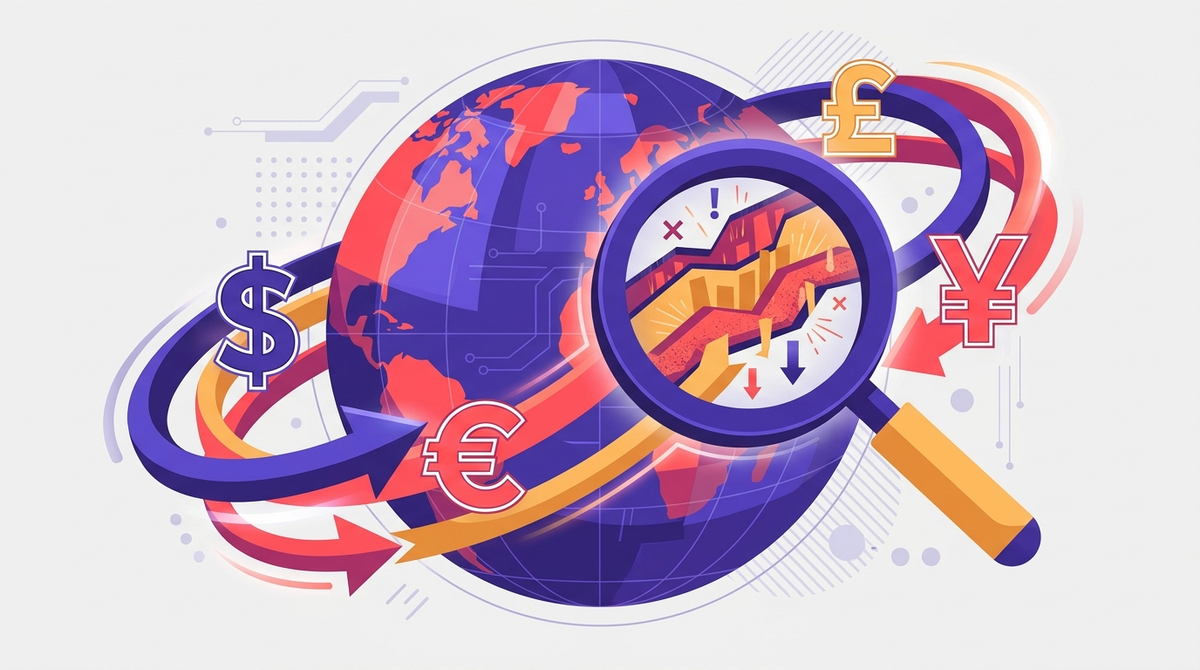
The wire transfer fee is the tip of the iceberg. Here's the full cost stack most companies don't track:
1. FX Markup (The Big One)
Banks typically add 1-3% markup on the exchange rate. On a $100,000 invoice, that's $1,000-$3,000 — per transaction. Most businesses never compare the rate they received against the mid-market rate. They don't even know to look.
2. Intermediary Bank Fees
International wires often pass through 1-2 intermediary banks, each taking $10-$30. The sender doesn't see these — but the receiver does when they get $99,940 instead of $100,000. Now you've got a reconciliation problem AND a relationship problem.
3. Float Time
Wire transfers take 2-5 business days for cross-border settlement. On a $500,000 monthly payment volume, 4 days of float at 5% cost of capital = ~$275/month. Invisible, but real.
4. Failed Payment Costs
Wrong SWIFT codes, incomplete beneficiary info, compliance holds — failed cross-border payments cost $25-$50 in bank fees per attempt, plus 3-7 days of delay, plus the staff time to investigate and retry. Industry data suggests 3-5% of cross-border payments fail on first attempt.
5. Reconciliation Overhead
When a payment arrives minus intermediary fees, in a different currency, 4 days after the expected date, with a truncated reference number — someone has to figure out which invoice it belongs to. At scale, this is a full-time job.
The Real Math
For a mid-size distributor processing $5M annually in cross-border payments:
| Cost Component | Estimated Annual Cost |
|---|---|
| FX markup (1.5% avg) | $75,000 |
| Wire fees ($40 x 200 transactions) | $8,000 |
| Intermediary fees ($25 x 200) | $5,000 |
| Float cost (4 days avg) | $2,700 |
| Failed payment retry (4% failure rate) | $1,200 |
| Reconciliation labor (0.5 FTE) | $30,000 |
| Total | ~$122,000 |
That's 2.4% of payment volume — not the 0.5% most companies think they're paying.
What's Changing in 2026
The cross-border payment landscape is shifting fast:
Multi-currency accounts are becoming accessible to mid-market businesses, not just enterprises. Hold, pay, and receive in multiple currencies without constant conversion.
Local payment rails (SEPA, Faster Payments, PIX, UPI) are being connected through platforms that route payments through the cheapest path — not the bank's default path.
Real-time reconciliation powered by AI is eliminating the matching problem. Payments are reconciled as they arrive, not in a weekly batch.
Alternative payment methods — local bank transfers, digital wallets, even real-time payment networks — give international buyers options beyond "send a wire and hope for the best."
Five Things You Can Do This Quarter
1. Audit your real FX costs. Compare the rates you received on your last 20 wire transfers against the mid-market rate at time of execution. The gap will surprise you.
2. Offer local payment options. If you have buyers in Europe, accept SEPA transfers. If you have buyers in the UK, accept Faster Payments. Each local option you add removes friction AND cost.
3. Start accepting payments in buyer currencies. Yes, you take on FX risk. But the reduction in payment delays often outweighs the currency risk — and you can hedge strategically.
4. Automate reconciliation. If someone on your team is spending >5 hours/week matching payments to invoices, that's a solved problem in 2026.
5. Benchmark your payment provider. Banks aren't the only option anymore. Fintech platforms specializing in B2B cross-border payments routinely offer 50-70% lower costs than traditional bank wires.
The Competitive Angle
Here's what most companies miss: payment experience is a competitive differentiator.
When Buyer A can pay you instantly via local bank transfer with auto-reconciliation, and paying your competitor requires a $50 wire transfer that takes 4 days and arrives short by $25 in intermediary fees — who do you think gets the repeat order?
Cross-border payment optimization isn't a finance project. It's a customer experience project.
What's your cross-border payment setup look like? Wire-only, or have you started exploring alternatives? I'm researching this space extensively — would love to hear what's working (and what isn't) for your business.