Why Buyer Intelligence Is the Competitive Advantage Nobody's Talking About
Here's a scenario that plays out every day in global B2B trade:
A new buyer places a $200,000 order. Your sales team is thrilled. They push to approve net-60 terms to close the deal. The credit team runs a basic check — D&B report looks fine, no red flags. Terms approved.
Sixty days later: silence. Ninety days: still nothing. One hundred twenty days: you discover the buyer has been in financial distress for months. The D&B report was based on 8-month-old financial statements.
Write-off: $200,000. The commission was $14,000. Do the math on how many deals you need to close to recover from one bad credit decision.
The Buyer Intelligence Gap
Most B2B companies operate with what I call "snapshot credit" — a point-in-time assessment that's already stale by the time it's completed. The standard process:
- New buyer applies for credit
- Credit team pulls a report (D&B, Experian, etc.)
- Maybe they check a reference or two
- Credit limit is set
- Nothing happens until something goes wrong
Steps 1-4 might take 3-7 days. Step 5 is where the real damage occurs — because between the initial check and the first missed payment, the buyer's situation may have changed dramatically.
What Buyer Intelligence Actually Means
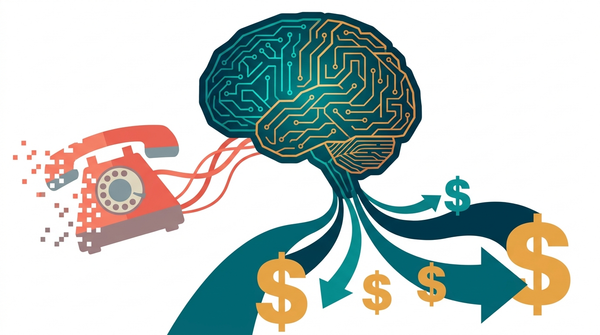
Real buyer intelligence isn't a credit report. It's a living, breathing understanding of your buyer's health, behavior, and risk profile. It includes:
Financial signals (beyond the credit report):
- Payment behavior across their other suppliers (not just you)
- Cash flow indicators derived from banking data (where available)
- Industry-level stress indicators (tariff exposure, commodity prices, regulatory changes)
- Public filing changes (liens, judgments, UCC filings)
Behavioral signals (from your own data):
- Ordering pattern changes (sudden decrease = potential trouble; sudden increase = potential fraud)
- Payment pattern shifts (gradually slowing = cash flow stress)
- Dispute frequency changes (increasing disputes = possible distress or dissatisfaction)
- Communication responsiveness (going quiet is the most reliable early warning)
Market signals (external context):
- Their industry's health trajectory
- Their geography's economic conditions
- Their key customers' financial health (your buyer's risk is partially their customers' risk)
- Regulatory or tariff changes affecting their sector
The ROI of Getting This Right
The math on buyer intelligence is absurdly good:
Reduced write-offs: Companies with continuous monitoring report 50-90% fewer bad debt write-offs. On a $50M revenue base with historical 1% bad debt, that's $250K-$450K saved annually.
Faster onboarding: Automated KYB and credit decisioning can reduce buyer onboarding from 5 days to hours. When your competitor takes a week to approve credit and you do it same-day, you win the deal.
Higher approval rates: Better data means more confidence. Companies using AI-driven buyer intelligence approve 20-30% more buyers at appropriate risk levels, because they can differentiate between "no data" (risky by default) and "low risk with thin file" (opportunity).
Dynamic credit management: Instead of static credit limits reviewed annually, intelligent systems adjust limits based on real-time behavior. A buyer with improving payment patterns gets expanded limits automatically. A buyer showing stress gets flagged before they default.
The Sales-Finance Alignment Problem
Here's the organizational reality: sales wants to approve everyone, finance wants to approve no one, and the buyer caught in the middle goes to your competitor.
Buyer intelligence solves this by replacing gut feelings and policy arguments with data:
- Sales can see exactly why a buyer was declined (and what would need to change)
- Finance can approve more deals with confidence (because monitoring catches problems early)
- Both teams align around the same data instead of arguing from different positions
The best implementations I've seen give sales a "buyer health score" visible in their CRM. Green means go. Yellow means proceed with adjusted terms. Red means escalate. No more multi-day email chains between sales and credit.
The China Factor
For businesses in global trade — particularly those dealing with China-based buyers or suppliers — buyer intelligence takes on additional complexity:
- Corporate structures are opaque
- Financial data availability varies significantly
- Regulatory environments shift rapidly
- Traditional credit bureaus have limited coverage
This is exactly where AI-driven intelligence adds the most value — synthesizing fragmented data from multiple sources, languages, and formats into actionable risk assessments.
Getting Started: The Practical Path
Week 1-2: Audit your current credit process. How long does buyer approval take? What data do you actually use? When was the last time you reviewed existing buyer limits?
Week 3-4: Segment your buyers by risk tier. Your top 20% by volume deserve continuous monitoring. Your long tail might need different treatment than your whale accounts.
Month 2: Implement automated monitoring for your top-tier buyers. This can be as simple as setting up alerts for payment pattern changes in your existing AR system.
Month 3: Evaluate platforms that provide continuous buyer intelligence. The technology exists — it's a matter of connecting it to your workflow.
Ongoing: Build the feedback loop. Every write-off is a learning opportunity. Every early warning that prevented a loss validates the investment.
The Bottom Line
In global B2B trade, you're not just selling products — you're extending credit. Every open invoice is a loan to your buyer.
Would you make a loan based on 8-month-old financial statements with no ongoing monitoring?
That's what most B2B companies are doing today. The ones that figure out buyer intelligence first will grow faster, lose less, and build more durable competitive advantages.
How do you handle buyer credit decisions today? Running on credit reports and gut feel, or have you started building something more intelligent? Always interested in hearing how businesses are approaching this — connect and share your experience.