The $2.5 Trillion Trade Finance Gap - and Who's Closing It

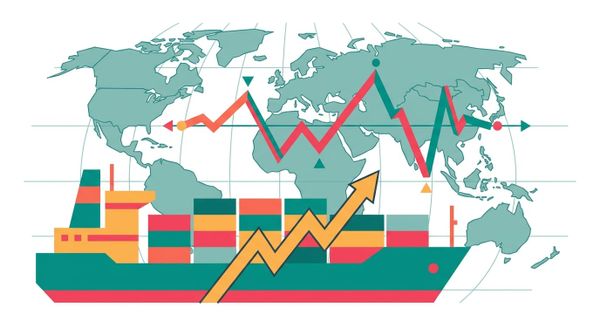
The Asian Development Bank has been tracking a number for years that deserves far more attention outside trade finance circles than it gets: the global trade finance gap, most recently estimated at roughly $2.5 trillion annually (earlier survey years put it closer to $1.5 trillion, so treat the exact figure as a moving estimate, not a precise measurement). That's the gap between the trade finance businesses - overwhelmingly small and medium enterprises - actually need to fulfill export and import orders, and what they can actually access from traditional banks.
Let that number sit for a second. It's not a rounding error in the global financial system. It's larger than the GDP of most countries. And it represents, very concretely, real orders that couldn't be fulfilled, real trade that couldn't happen, and real SMEs that couldn't grow - not because the demand wasn't there, but because the financial infrastructure to support it wasn't.
I want to unpack why this gap exists, why it's stayed stubbornly large despite decades of attention, and who's actually making a dent in it right now versus who's just talking about it.
Why the Gap Exists in the First Place
The trade finance gap isn't a mystery - it's the predictable output of how traditional trade finance is underwritten and delivered.
Traditional bank trade finance is built for large, established corporates. Letters of credit, documentary collections, and traditional trade loans require extensive documentation, established banking relationships, and often collateral that SMEs in emerging and developing markets simply don't have. Banks' internal economics also favor larger transactions - the cost of underwriting a $50,000 trade finance facility isn't meaningfully lower than underwriting a $5 million one, but the revenue is, so banks rationally prioritize the larger deals.
Post-2008 regulatory capital requirements made trade finance less attractive for banks. Basel III and related capital adequacy frameworks raised the cost for banks of holding many trade finance exposures, particularly to lower-rated counterparties in emerging markets. Trade finance is, historically, a remarkably low-default asset class - industry data, including the ICC's Trade Register, has consistently shown very low default rates on trade finance instruments relative to general corporate lending - but the regulatory capital treatment hasn't always reflected that low-risk profile, making banks less willing to extend it, especially to SME and emerging-market counterparties.
SMEs in developing markets lack the credit history banks want to see. Traditional underwriting relies on years of audited financials, established credit bureau history, and formal banking relationships. A huge portion of SME trade activity, particularly in developing markets, happens without the paper trail traditional underwriting requires - not because the businesses are unreliable, but because the formal financial infrastructure around them is thin.
Correspondent banking has been retreating from smaller, riskier markets. Global banks have been reducing correspondent banking relationships in markets perceived as higher-risk for compliance reasons (AML, sanctions exposure), which cuts off the banking rails smaller regional banks need to facilitate trade finance for their own SME clients. This is a structural, compounding problem - as correspondent relationships shrink, it gets harder for local banks in affected markets to offer trade finance at all, regardless of their appetite to do so.
Women-owned and minority-owned SMEs face an amplified version of this gap. Research from institutions including the ADB and IFC has pointed to the trade finance gap disproportionately affecting women-owned businesses, who face additional barriers in accessing formal credit. This isn't a footnote - it's a meaningful and persistent sub-pattern within the broader gap.
Why This Isn't Just an "Emerging Markets Problem"
It's tempting to file this under "development finance" and move on if you're running AR or credit for a mid-market company in a developed economy. That would be a mistake, for a few reasons.
Your supply chain probably includes SMEs affected by this gap. If you source from smaller manufacturers or work with distributors in markets where trade finance access is constrained, their ability to fulfill your orders reliably is directly affected by whether they can finance the working capital gap between producing goods and getting paid. A supplier who can't access affordable trade finance is a supplier more likely to have cash flow problems that affect your delivery timelines and quality.
The gap creates opportunity for buyers with strong balance sheets. Larger, well-capitalized buyers who can offer supply chain finance programs - effectively extending their own credit strength to smaller suppliers who can't access it independently - gain real competitive advantage in securing reliable, loyal supply relationships. This is a genuine strategic lever, not just a corporate social responsibility talking point.
The gap is a growth constraint on your addressable market. If you're selling into markets where your buyers' ability to finance imports is constrained, your total addressable market is smaller than the underlying demand suggests. Closing the financing gap, even partially, through your own trade finance or embedded financing offerings can expand who can actually buy from you.
Who's Actually Closing It
The headline gap number hasn't shrunk dramatically over the years it's been tracked, but that doesn't mean nothing is happening. Several categories of players are making real, measurable progress on specific slices of the problem.
Multilateral Development Banks and Their Trade Finance Programs
Institutions like the IFC (International Finance Corporation), the ADB, and regional development banks run trade finance facilitation programs that provide guarantees to local banks, effectively de-risking their trade finance exposure to SMEs and encouraging them to lend where they otherwise wouldn't. These programs are meaningful but operate at a scale far smaller than the total gap - they're closing specific pockets, not the whole problem.
Fintech Trade Finance Platforms
A growing category of fintech companies is applying alternative underwriting - using shipping data, purchase order information, transaction history, and satellite/logistics data rather than traditional financial statements - to extend trade finance to SMEs that banks won't touch. These platforms are still small relative to the overall gap but are growing quickly, and importantly, are demonstrating that the underlying credit risk on many of these underserved SMEs is manageable with better data, not that the risk is actually as high as traditional underwriting assumed.
Supply Chain Finance Programs Run by Large Buyers
As mentioned above, large, well-capitalized buyers extending supply chain finance programs to their SME suppliers - effectively letting suppliers get paid early against the buyer's stronger credit rating - are quietly closing a meaningful piece of the gap without it being labeled as "trade finance gap" work. This is one of the more underappreciated forces at work here, because it's driven by buyer self-interest (securing reliable supply) rather than development mandate.
Trade Credit Insurance Expansion Into New Markets
Trade credit insurers have been expanding coverage into markets and SME segments they historically avoided, partly enabled by better data and partly by growing appetite to underwrite this risk as a distinct, insurable category rather than lumping it into generalized emerging-market risk. Insurance doesn't directly provide financing, but it makes banks and other financiers more willing to extend trade finance because the underlying risk is now transferable.
Blockchain and Digital Trade Documentation Initiatives
Efforts to digitize and standardize trade documentation - bills of lading, letters of credit, certificates of origin - aim to reduce the cost and friction of trade finance processing, which disproportionately affects smaller transactions where fixed processing costs eat a larger share of the deal value. Progress here has been slower than early enthusiasm suggested, but the direction is real, and every basis point of reduced processing friction makes smaller trade finance deals more economically viable for lenders.
The Honest Assessment
I don't think this gap gets fully closed in the next decade. The structural forces - regulatory capital treatment, correspondent banking retreat, thin credit history in developing markets - are deep and slow-moving. But the trajectory matters more than the absolute number, and the trajectory has genuinely improved: better data, better underwriting technology, and a growing recognition among both fintechs and large buyers that closing pieces of this gap is a legitimate business opportunity, not just a development finance mandate, is bringing new capital and new capability to the problem faster than at any point I've tracked it.
If you're a finance leader whose business touches global trade - and increasingly, that's most B2B companies of any size - understanding where your own suppliers and buyers sit relative to this gap isn't an abstract macro concern. It affects your supply chain reliability, your addressable market, and increasingly, your own competitive positioning if you're willing to extend the financing others won't.
What Finance Leaders Can Actually Do
Map your supply chain's financing dependency. Understand which of your critical suppliers are likely constrained by trade finance access, particularly smaller suppliers in markets with known correspondent banking retreat or thin financial infrastructure. This is a supply chain risk assessment most companies haven't done.
Consider structured early payment or supply chain finance for critical SME suppliers. If a key supplier's reliability is constrained by their own working capital access, extending your credit strength to them - at a cost that's still cheaper than what they'd pay for alternative financing - can be a genuinely mutually beneficial arrangement, not charity.
Evaluate buyer intelligence tools that go beyond traditional credit history. If you're extending credit to buyers in markets with thin traditional credit infrastructure, tools that assess creditworthiness using alternative data sources will give you a more accurate picture than relying solely on traditional credit bureau data that may not exist or may be unreliable for your specific counterparty.
Watch the fintech trade finance space for partnership opportunities. Several of the fintech platforms closing pieces of this gap are looking for enterprise partners - buyers willing to participate in supply chain finance programs, or companies willing to provide transaction data that improves underwriting for their trading partners.
The $2.5 trillion figure is a symptom of a financial system that hasn't caught up with the reality of how global trade actually works today - conducted increasingly by SMEs, in increasingly diverse markets, with increasingly digital transaction trails that traditional underwriting still isn't fully using. The businesses and institutions closing this gap aren't doing it out of charity. They're doing it because the risk, properly assessed with better data, is more manageable than the traditional system assumed - and because there's real money to be made serving a market that's been underserved for decades.
If your business sources from or sells into markets affected by the trade finance gap, has it shown up as a visible risk in your supply chain or receivables - or has it stayed invisible until something broke? I'd like to hear how this is actually showing up on the ground, not just in the macro statistics.