AI-Powered Dunning: Why Smart Collection Sequences Are Replacing Spreadsheet Follow-Ups
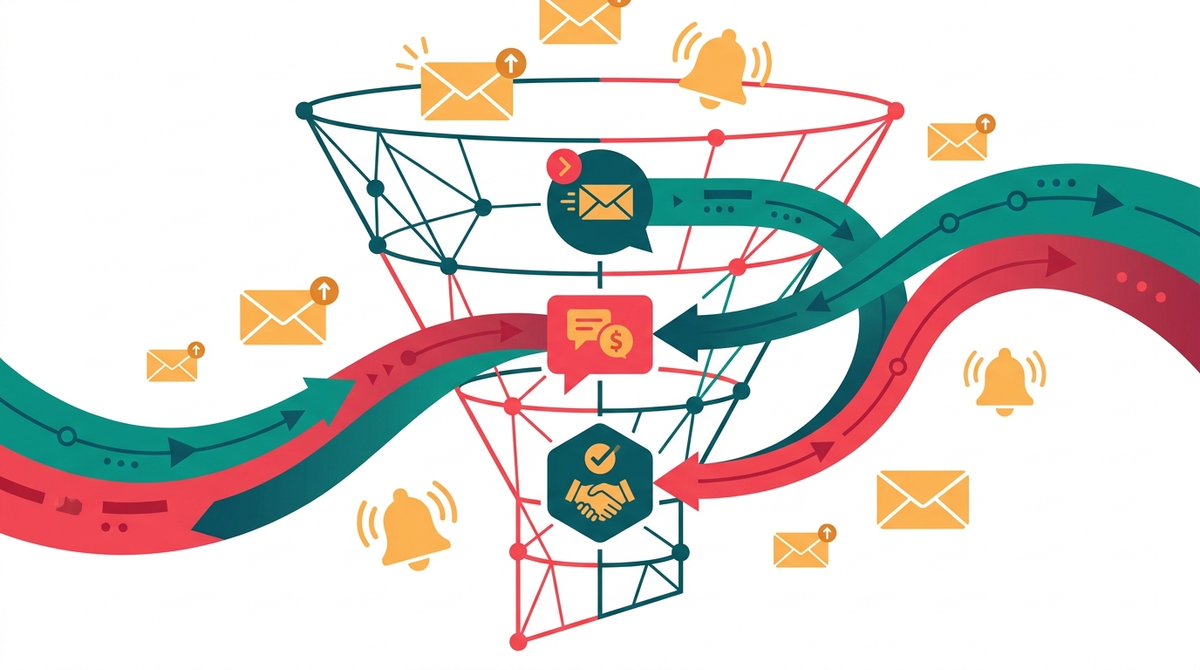
title: "AI-Powered Dunning: Why Smart Collection Sequences Are Replacing Spreadsheet Follow-Ups"
category: "Collections & AI"
author: "Dan Levin"
target_keywords:
- AI-powered dunning
- smart collection sequences
- automated dunning process
- AI collections B2B
- dunning optimization
AI-Powered Dunning: Why Smart Collection Sequences Are Replacing Spreadsheet Follow-Ups
Let me describe a scene you'll recognize.
It's Tuesday morning. Your AR analyst opens a spreadsheet - the same one they've maintained for months, maybe years. It lists every overdue invoice, sorted by days past due. They start at the top and work their way down. Every customer gets roughly the same email: "Per our records, invoice #12345 dated March 15 in the amount of $47,320 remains outstanding. Please remit payment at your earliest convenience."
Copy. Paste. Change the invoice number. Change the amount. Send. Next row. Repeat 40 times.
This is how the majority of B2B companies still run collections. And it's staggeringly ineffective.
Not because the people doing it are bad at their jobs. They're often excellent - diligent, organized, persistent. The problem is that a human being sending templated emails from a spreadsheet simply cannot optimize the dozens of variables that determine whether a collection attempt actually results in payment.
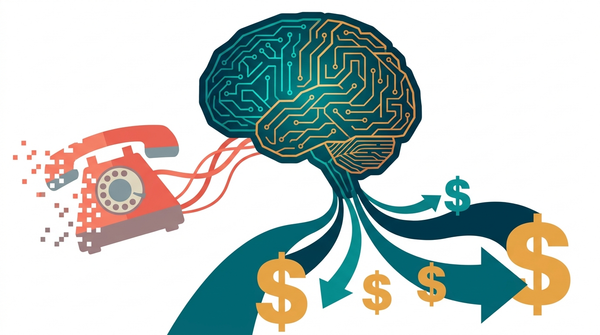
AI-powered dunning isn't about replacing your AR team. It's about giving them leverage they've never had.
What Traditional Dunning Actually Looks Like (And Why It Fails)
Let's be honest about the state of play. In most mid-market B2B companies, the dunning process looks something like this:
The spreadsheet era: AR staff export aging reports from the ERP, paste them into Excel, add columns for notes and follow-up dates, and manually track every communication. The spreadsheet is the system of record for collections activity.
The template trap: There are maybe 3-4 email templates - a gentle first reminder, a firmer second notice, a "final warning," and an escalation to the customer's executive. Every customer gets the same sequence regardless of their history, their payment patterns, or their situation.
The timing guess: When should you send the first reminder? Day 1 past due? Day 7? Most teams pick a number and stick with it universally. Maybe they send reminders every Monday because that's when they have time.
The channel limitation: Almost everything goes via email. Occasionally someone picks up the phone for large amounts. Very few teams systematically use multiple channels or vary the approach based on what works.
The follow-up gap: Once a reminder is sent, tracking whether it was opened, whether the customer visited the payment portal, whether they started a payment that failed - none of this feeds back into the process. The next action is always "wait, then send another email."
This approach fails for predictable reasons:
- Wrong timing. A reminder sent on a customer's busiest day gets buried. The same reminder sent when their AP team processes payments gets acted on.
- Wrong tone. A loyal customer who's 5 days late because of an internal approval delay gets the same stern template as a serial late-payer. One feels insulted. The other ignores it.
- Wrong channel. Some AP teams respond to emails. Others only act on phone calls. Some respond fastest to portal notifications or even SMS. One-channel dunning misses the target for a significant portion of your receivables.
- Wrong frequency. Too many reminders and you train customers to ignore them. Too few and invoices slip through the cracks. The right cadence varies by customer, by amount, by your industry.
- No learning. The process doesn't get smarter over time. The same approach that failed last month will be repeated this month.
How AI Optimizes Timing, Channel, and Tone
AI-powered dunning works by treating each collection interaction as a decision with measurable outcomes, then optimizing those decisions based on data.
Timing Optimization
An AI system can analyze your historical payment data and identify patterns that humans can't see at scale:
- Customer A consistently pays invoices on the 15th and 30th of each month, regardless of due date. Sending a reminder on the 14th catches their payment cycle.
- Customer B's AP team processes payments on Tuesdays and Thursdays. Emails sent Monday evening get actioned Tuesday morning.
- Invoices over $50,000 at Customer C require VP approval, which adds 7-10 days. The "overdue" notice at day 1 is premature and just creates noise.
Instead of fixed schedules, AI-powered dunning dynamically selects the optimal send time for each customer and each invoice based on when past interventions actually resulted in payment.
Channel Selection
Different customers respond to different channels. AI can learn this:
- Customer D has never responded to an email dunning reminder in 18 months - but they pay within 48 hours of a phone call every single time.
- Customer E's AP contact clicks the payment link in SMS reminders at a 4x higher rate than email reminders.
- Customer F responds fastest when their procurement contact is CC'd on the reminder, not just the AP contact.
A smart system tests channels, tracks results, and routes each dunning attempt through the channel most likely to generate a response from that specific customer.
Tone Calibration
This is where it gets nuanced. The right tone depends on context:
- A first-time late payment from a 5-year customer calls for a light touch - "Hey, this one might have slipped through. Here's a quick link to take care of it."
- A third consecutive late payment from the same customer calls for a different conversation - one that acknowledges the pattern and asks if something has changed.
- A customer who's also a major prospect for upsell needs a tone that preserves the commercial relationship while still collecting what's owed.
- A customer currently in a dispute over a separate invoice needs a collection message that acknowledges the dispute without letting it become an excuse for non-payment on undisputed invoices.
AI can adjust messaging across these dimensions automatically, selecting from a library of tone variants and personalizing based on the customer's profile, relationship status, and payment history.
Building Personalized Collection Sequences
The real power of AI dunning isn't any single optimization - it's composing these elements into personalized sequences for every customer.
Here's what a smart collection sequence might look like for different customer profiles:
Profile: Reliable Payer, Occasional Late
Day -3 (before due date): Friendly payment reminder with one-click payment link. "Your invoice is coming due on Friday - here's a link if you'd like to get it off your plate early."
Day +3 (if unpaid): Light nudge via the same channel. "Quick follow-up - looks like this one might have slipped. Same payment link below."
Day +10 (if still unpaid): Escalation flag to AR manager for personal outreach. Something's probably wrong - maybe a dispute, maybe a cash flow issue. A human conversation is more appropriate than another automated email.
Profile: Chronically Slow, Always Pays Eventually
Day +1: Immediate reminder. This customer responds to volume, not patience.
Day +5: Second reminder via different channel (phone if email was first, or vice versa).
Day +10: Third reminder with slightly firmer language and a statement of account showing all outstanding invoices.
Day +15: Escalation to their management contact with a clear summary.
Day +20: Hold notification - new orders will be held until the account is current.
Profile: Large Strategic Account
Day +5: Account manager notification (not a dunning email). The commercial relationship takes priority.
Day +10: Gentle reminder from AR, framed as administrative. CC the account manager.
Day +15: AR manager calls the AP contact directly to resolve.
Day +20+: Executive-to-executive escalation only if necessary.
AI builds and refines these sequences automatically, testing variations and measuring what actually moves the needle for each customer segment.
Measuring Dunning Effectiveness
You can't improve what you don't measure. Most companies track DSO and call it a day. AI-powered dunning enables much more granular measurement:
Collection Effectiveness Index (CEI): The percentage of receivables collected in a given period relative to what was available to collect. This is more meaningful than DSO because it measures your team's actual impact rather than a lagging average.
Promise-to-Pay Conversion Rate: When a customer promises to pay by a certain date, how often do they actually do it? This measures the quality of your collection conversations.
Dunning Response Rate: What percentage of dunning messages get a response (payment, promise, dispute, or at least acknowledgment)? A low response rate means your messages are being ignored - a signal to change approach.
Time to Resolution by Segment: How long does it take to resolve overdue invoices for each customer segment? This identifies where your process works and where it doesn't.
Channel Effectiveness: Which channels produce the highest response rates and fastest payment for which customer types?
Sequence Completion Rate: How far into the dunning sequence do invoices typically go before being resolved? If most invoices resolve at step 1, your process is efficient. If most reach the final escalation step, your early interventions aren't working.
The Data You Need to Make AI Dunning Work
AI-powered dunning isn't magic - it's pattern recognition at scale. The quality of the output depends entirely on the quality of the input. Here's the data that matters:
Transactional history: Every invoice, payment, credit note, and adjustment. The AI needs to see the full picture of each customer's payment behavior over time.
Communication logs: Every email sent, phone call logged, message delivered. This is the training data for optimizing timing and channel selection.
Customer metadata: Industry, size, geography, relationship tenure, credit terms, assigned account manager. These are the segmentation variables.
Behavioral signals: Email opens, payment link clicks, portal logins, partial payment attempts. These real-time signals tell the AI whether a customer is engaged or ignoring you.
Dispute data: Open disputes, dispute history, resolution patterns. Dunning around disputed invoices requires different handling.
External data: Credit ratings, news events, industry trends. A customer whose credit rating just dropped warrants a different approach than one whose business is thriving.
The biggest implementation challenge I see isn't the AI itself - it's getting this data into one place. Most companies have transactional data in the ERP, communications in email, call logs in a CRM or nowhere, and behavioral data scattered across portals and marketing tools.
The Real ROI: Smart Dunning vs. Manual Collections
Let's talk numbers, because this is where the case gets compelling.
Efficiency gains: A typical AR analyst can manage 150-200 accounts manually. With AI-powered dunning handling routine outreach, the same analyst can oversee 500-800 accounts and focus their time on the complex cases that actually need human judgment. That's a 3-4x productivity multiplier without adding headcount.
DSO reduction: Companies implementing intelligent dunning typically see DSO improvements of 5-15 days. On a $50 million receivables portfolio, reducing DSO by 10 days frees up roughly $1.4 million in working capital. At a 6% cost of capital, that's $84,000 per year in financing costs avoided.
Recovery rate improvements: Optimized timing and channel selection typically improve collection rates on 30-60 day overdue invoices by 15-25%. The invoices that would have aged into 90+ days get caught earlier.
Reduced write-offs: Earlier, smarter intervention means fewer invoices reach the point of no return. Companies report 20-40% reductions in bad debt write-offs after implementing AI dunning.
Customer retention: This is the one nobody puts on the business case but everyone notices. When your collection process treats customers like individuals rather than rows in a spreadsheet, relationships survive the inevitable friction of late payments. A customer who felt respected through a collections interaction is more likely to keep buying from you.
Making the Transition
Moving from spreadsheet follow-ups to AI-powered dunning isn't a weekend project, but it doesn't have to be a multi-year transformation either. Here's the practical path:
Phase 1: Consolidate your data. Get your invoices, payments, and communication history into one system. This might mean implementing an AR automation platform or connecting your ERP to a collections tool.
Phase 2: Define your segments. Start with 3-5 customer segments based on payment behavior (reliable, occasionally late, chronically late, high-risk, strategic). Create differentiated dunning sequences for each - even manual ones.
Phase 3: Automate the routine. Deploy automated reminders for your first and second dunning steps. This alone will free up significant analyst time and catch the easy collections earlier.
Phase 4: Add intelligence. Implement AI-driven optimization for timing, channel selection, and escalation triggers. This is where the real differentiation kicks in.
Phase 5: Measure and refine. Track the metrics above. Let the AI learn from outcomes. Continuously refine your sequences based on what the data tells you.
The companies that will dominate B2B collections over the next five years aren't the ones with the biggest AR teams. They're the ones with the smartest dunning processes - systems that learn from every interaction and get better at converting overdue invoices into cash every single day.
Your spreadsheet can't do that. It never could.
For those who've moved from manual to automated dunning - what was the single biggest improvement you saw? Was it the efficiency gain, the DSO reduction, or something unexpected?