Working Capital as a Service: The New Fintech Category
title: "Working Capital as a Service: The New Fintech Category"
category: "Fintech & Innovation"
author: "Dan Levin"
target_keywords:
- working capital as a service
- WCaaS fintech
- embedded working capital
- API-driven working capital
- fintech lending B2B
Working Capital as a Service: The New Fintech Category
Something interesting is happening in B2B finance, and it's not getting enough attention.
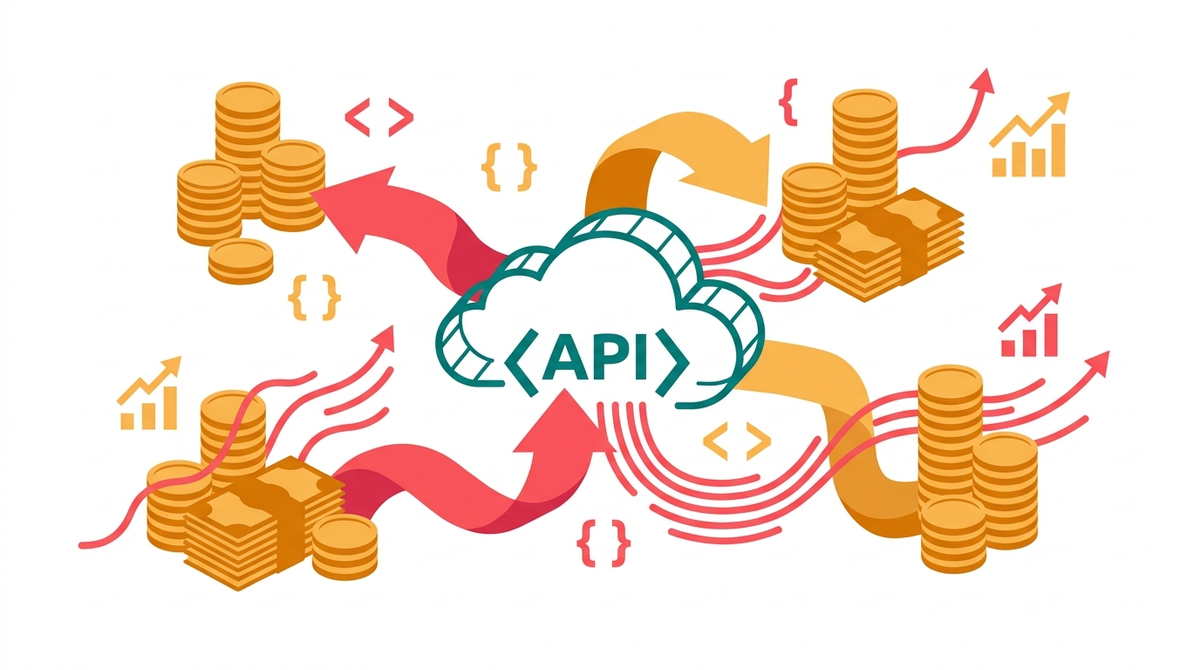
Working capital - historically something you got from a bank, after a lengthy application, secured by real estate or personal guarantees, renewed annually if you were lucky - is becoming an API call.
A new category of fintech companies is emerging that I'm calling Working Capital as a Service - WCaaS. They're embedding financing directly into the platforms where B2B transactions happen, using transaction data rather than financial statements to underwrite, and making capital available in hours rather than weeks.
This isn't just another fintech buzzword. It represents a fundamental restructuring of how businesses access liquidity. And if you're running an AR or finance function, you need to understand what's coming - because it's going to change how your customers pay you and how you manage your own cash flow.
The Evolution: From Bank Credit Lines to API-Driven Capital
To understand where we're going, it helps to understand where we've been.
Phase 1: Traditional bank lending (still dominant). You walk into a bank. You provide two years of audited financial statements, tax returns, AR and AP aging reports, a business plan, and possibly a firstborn child. The bank takes 4-8 weeks to underwrite. If approved, you get a revolving credit line secured by your assets, with covenants you need to monitor quarterly. The facility gets reviewed annually, and the bank can (and does) pull it during downturns - exactly when you need it most.
This model works for established, mid-market and larger companies with the financial history and assets to support it. It fails completely for growing businesses, companies with limited operating history, companies in markets the bank doesn't understand, and any business that needs capital faster than a credit committee can meet.
Phase 2: Online lending (2010s). Companies like Kabbage, OnDeck, and BlueVine brought the application online, shortened approval times to days, and used bank transaction data and accounting software connections to automate parts of the underwriting. But fundamentally, they were still making lending decisions based on backward-looking financial data. They were faster banks, not a different model.
Phase 3: Embedded finance (mid-2010s to present). Stripe Capital, Shopify Capital, Amazon Lending, and Square Loans started offering financing to their merchants based on the transaction data flowing through their platforms. This was the inflection point. These companies didn't need to ask for financial statements - they could see revenue in real-time. They didn't need personal guarantees - they could deduct repayment from future settlements. The underwriting was fundamentally different because the data was fundamentally different.
Phase 4: Working Capital as a Service (now emerging). The embedded finance model is being generalized and made available through APIs to any platform that wants to offer financing to its participants. B2B marketplaces, procurement platforms, logistics networks, and ERP systems can now embed working capital directly into their workflows. A supplier on a marketplace can get an advance against a confirmed purchase order. A shipper on a logistics platform can finance their fuel costs against pending freight receivables. Capital meets the business at the point of need, not at a bank branch.
How Platforms Are Offering WCaaS to Their Sellers
The mechanics of WCaaS vary by platform, but the pattern is consistent:
The data advantage. A B2B marketplace sees every transaction between buyers and sellers - order volume, frequency, average ticket size, return rates, disputes, payment timing. This transaction-level data is more predictive of creditworthiness than annual financial statements, because it's real-time, granular, and hard to manipulate.
The integration advantage. Because the platform processes payments, it can structure repayment as a deduction from future settlements. This dramatically reduces credit risk - the lender doesn't need to chase repayments because they control the payment flow. This is why loss rates on embedded lending are typically 50-70% lower than traditional unsecured business lending.
The timing advantage. Capital offers can be triggered by specific events: a large order confirmation, a seasonal demand spike, a new buyer onboarding. The capital shows up exactly when it's needed, not on the bank's quarterly review schedule.
The friction advantage. No application forms. No document uploads. No waiting. A seller on the platform gets a financing offer based on their transaction history. They click accept. Funds are in their account within hours. This isn't just convenience - it's a structural advantage that makes capital accessible to businesses that would never apply for a traditional loan.
Here's what this looks like in practice across different platform types:
B2B marketplaces offer seller financing based on confirmed orders. A supplier receives a $200,000 order from a buyer on the platform. The marketplace offers to advance 80% of the order value immediately, with repayment deducted when the buyer pays. The supplier can fulfill the order without straining their cash flow.
Procurement platforms offer buyer financing at the point of purchase. A buyer submitting a purchase order can choose to pay in 60 or 90 days, with the platform's financing partner funding the gap. The supplier gets paid immediately. The buyer gets extended terms. The platform increases transaction volume.
Logistics platforms offer freight factoring embedded in the booking flow. A carrier books a load, confirms delivery, and gets paid the same day instead of waiting 30-45 days for the broker or shipper to settle.
ERP and accounting platforms offer credit lines based on the financial data already in the system. No duplicate data entry, no separate application - the ERP has everything the lender needs to underwrite.
The Data Advantage Fintechs Have Over Banks
This is the core of why WCaaS is structurally different from traditional lending, not just operationally faster.
Banks underwrite based on financial statements - backward-looking, annual, aggregated, and easily manipulated. A balance sheet tells you where a company was at a point in time. An income statement tells you what happened over a period. Neither tells you what's happening right now.
WCaaS providers underwrite based on transaction data - real-time, granular, continuous, and very difficult to fake. They can see:
- Revenue velocity: Not just total revenue, but the trajectory. Is this seller growing, stable, or declining? At what rate? With what consistency?
- Customer concentration: How dependent is the seller on a few large buyers versus a diversified base?
- Payment patterns: Do the seller's buyers pay on time? What's the actual DSO, not the reported DSO?
- Dispute rates: High dispute rates signal operational or quality problems that traditional credit analysis might miss.
- Seasonal patterns: Does the business spike in Q4? Does it dip in summer? This informs both credit limits and repayment schedules.
- Behavioral signals: Is the seller logging in more frequently? Are they adjusting prices? These micro-signals can indicate stress or opportunity.
This data advantage compounds over time. The longer a seller operates on the platform, the richer the data set becomes, and the more precisely the WCaaS provider can price risk and size facilities.
Banks are aware of this gap and are trying to close it - through open banking initiatives, ERP integrations, and partnerships with fintech platforms. But the structural advantage of being embedded in the transaction flow is hard to replicate from outside.
What This Means for AR and Receivables Teams
If you're running an AR function, WCaaS affects you in several ways:
Your Customers Get Access to More Capital
As WCaaS proliferates, your buyers have more financing options to pay you on time - or early. Some platforms will offer your buyers the option to extend their payment terms while you get paid immediately. This is essentially supply chain finance, but delivered through a platform rather than a bank program you had to set up.
Your Own Financing Options Expand
If you sell through B2B platforms or marketplaces, you may be offered working capital directly through those channels. This can supplement or replace traditional factoring or credit lines, often at lower cost because the platform can mitigate risk through settlement deductions.
DSO Becomes More Controllable
When capital is embedded in the transaction flow, the concept of "waiting for the customer to pay" becomes less relevant. Your invoice might be paid immediately by the platform's financing partner, with the buyer repaying the platform on extended terms. Your DSO drops. Your cash flow stabilizes. The credit risk shifts to the financing provider.
Payment Behavior Data Becomes Currency
In a WCaaS world, your transaction history and payment behavior are your credit file. Companies with clean payment records, low dispute rates, and consistent volume will access cheaper capital and better terms. This creates an incentive to maintain clean AR practices - not just for your own metrics, but because your data is being used to underwrite your customers' financing.
The AR Function Becomes More Strategic
When routine working capital needs are handled by embedded financing, the AR team's role shifts from "chase payments" to "optimize the financing stack." Which receivables should be financed? Through which channel? At what cost? When should you use the platform's financing vs. your own credit line vs. factoring? These are strategic questions that require financial sophistication.
Where the Market Is Heading
Several trends are converging to accelerate WCaaS adoption:
Regulatory enablement. Open banking regulations in Europe, the UK, Brazil, and Australia are making it easier for fintech platforms to access the financial data they need to underwrite. The US is moving in this direction with CFPB's Section 1033 rulemaking, though more slowly.
Infrastructure maturation. Banking-as-a-service providers (like Unit, Treasury Prime, and Bond) make it possible for non-bank platforms to offer financial products without building banking infrastructure. The cost of embedding finance into a platform has dropped dramatically.
AI underwriting. Machine learning models are getting better at predicting creditworthiness from transaction data, enabling WCaaS providers to extend credit to businesses that traditional models would reject or underprice.
B2B marketplace growth. B2B e-commerce is projected to exceed $20 trillion globally. As more B2B transactions move onto digital platforms, the opportunity to embed financing at the point of transaction grows proportionally.
Corporate treasury demand. CFOs are increasingly frustrated with the rigidity and cost of traditional banking relationships. They want flexible, usage-based working capital that scales with their business. WCaaS delivers this in a way that annual credit facility renewals never could.
My prediction: within five years, most mid-market B2B companies will access at least some of their working capital through platform-embedded financing rather than traditional bank credit lines. The bank relationship won't disappear, but it will become one channel among several.
For AR teams, the implication is clear: the payments landscape is fragmenting. Your buyers will pay you through more channels, using more financing structures, with more variability in timing and terms. The teams that thrive will be the ones that can manage this complexity - tracking receivables across platforms, reconciling payments from multiple sources, and optimizing their own use of embedded financing to minimize working capital requirements.
The era of one bank, one credit line, one payment method is ending. Working Capital as a Service is what comes next.
Is your company already accessing working capital through platform-embedded financing, or is everything still running through traditional bank relationships? Curious to hear where mid-market companies actually are on this adoption curve.